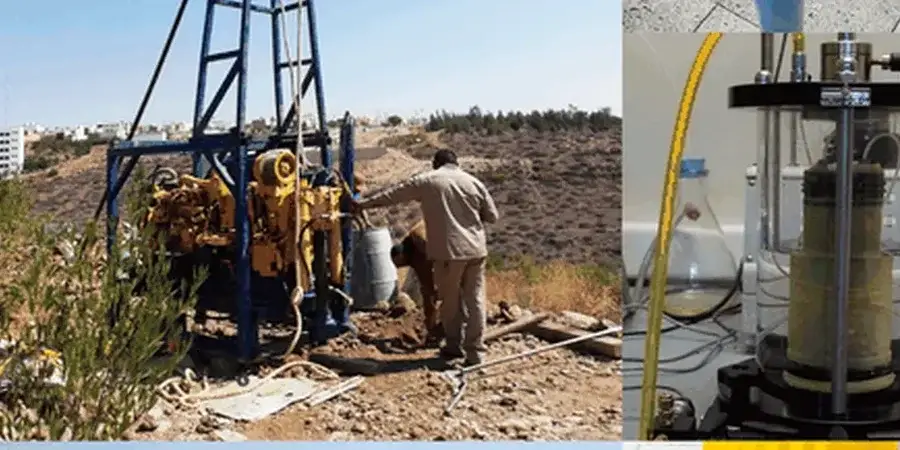
Our Coffs Harbour team delivers comprehensive geotechnical services tailored to the region’s unique coastal and hinterland environment. From subsurface site characterization and foundation design to slope stability assessments and construction monitoring, we provide integrated solutions that address the full spectrum of local project demands. We combine consolidated regional experience with calibrated laboratory equipment and code-compliant reporting to support residential, commercial, and infrastructure developments. Whether you require a soil mechanics study or a detailed settlement analysis, our approach ensures reliable, site-specific outcomes.
Technical reference image — Coffs Harbour
Method and coverage
Coffs Harbour lies within the New England Fold Belt, underlain by Paleozoic meta-sediments and Mesozoic granitic intrusions of the Coffs Harbour Block. The coastal plain features Quaternary alluvial deposits, including clayey sands, gravels, and soft estuarine clays, often with high groundwater tables. To the west, the terrain rises into the Great Dividing Range, where residual soils derived from weathered sandstone, shale, and phyllite dominate. These soils can exhibit variable strength and significant colluvium on steeper slopes. The region is subject to moderate seismic hazard, with potential for earthquake-induced ground shaking and liquefaction in loose saturated sands. Landslide susceptibility is notable along escarpments and cut slopes, particularly after heavy rainfall. Groundwater levels fluctuate seasonally, influenced by tidal cycles near the coast and by perched aquifers in colluvial deposits inland.
Regional considerations
Our team brings deep familiarity with Coffs Harbour’s subsurface conditions, having completed numerous projects across the coastal strip and hinterland. We operate a NATA-accredited laboratory for local soils and rock testing, ensuring rapid turnaround and data integrity. Close collaboration with Coffs Harbour City Council, local contractors, and geotechnical reviewers streamlines approvals and reduces project risk. Our slope stability analysis and foundation recommendations are routinely accepted by certifiers, reflecting our commitment to rigorous, site-specific engineering.
All investigations and designs adhere to Australian Standards, principally AS 1726 (Geotechnical Site Investigations) and AS 2870 (Residential Slabs and Footings). Foundation design follows AS 2159 (Piling) and AS 3600 (Concrete Structures). Slope stability analyses reference the Australian Geomechanics Society’s Landslide Risk Management guidelines and AS 1170.4 for seismic actions. Field testing, including SPT and CPT, is performed in accordance with AS 1289 series methods, ensuring consistent and defensible data.
Top questions
What are the typical soil conditions for building foundations in Coffs Harbour?
Soils vary widely: coastal sites often have soft estuarine clays and loose sands requiring deep foundations or Improvement, while inland areas feature residual silty clays and weathered rock that can support shallow footings after proper bearing capacity assessment. Fill and colluvium on slopes demand careful investigation to avoid differential settlement.
Does Coffs Harbour have any special landslide or flooding hazards I should consider?
Yes. Steep topography and high rainfall create landslide risk, especially on cut slopes and fill embankments. Council’s planning controls require geotechnical hazard assessments for developments in designated landslide-prone areas. Flooding in low-lying coastal zones and creek valleys can also affect foundation design and groundwater control.
Which Australian standards apply to geotechnical work in Coffs Harbour?
Key standards include AS 1726 for site investigations, AS 2870 for residential footings, AS 2159 for piling, and AS 1170.4 for seismic loads. For slope stability, we follow the AGS Landslide Risk Management guidelines. All field and lab testing complies with the AS 1289 series to ensure consistency and acceptance by local authorities.
How long does a typical geotechnical investigation take for a residential project?
For a standard house site, we usually complete drilling, sampling, and laboratory testing within one to two weeks. Reporting follows shortly after, depending on complexity. Council approval timelines vary, but our reports are structured to meet local requirements, helping to avoid delays in the development application process.