In Coffs Harbour, many sites sit on a mix of coastal sands, stiff clays, and fractured meta-sediments. Getting the N-value right here is not optional. The Standard Penetration Test (SPT) delivers the blow count data needed to assess bearing capacity and liquefaction potential. We run it per AS 1726 and AS 1289.6.3.1, using 63.5 kg hammers and split-spoon samplers. For deeper profiles in the Coffs Harbour basin, we often pair SPT with georradar-gpr to map bedrock depth before any foundation design begins. The combination cuts uncertainty in variable alluvial zones.
An N-value below 10 in Coffs Harbour's coastal sands signals loose fill — never build a slab without confirming it first.
Method and coverage
Coffs Harbour grew fast from the 1970s, pushing development onto former floodplains and steep slopes. The soil profile changes block by block. The SPT test here follows a strict sequence: borehole advancement, 150 mm seating drive, then 300 mm test drive. We record blow counts per 150 mm increment. The N-value (sum of last two increments) feeds directly into settlement and slope stability calculations. In weathered rock zones, we switch to coring but keep SPT in the overburden. We also integrate capacidad-de-carga analyses with SPT results to define allowable bearing pressures for shallow and deep foundations. The method is fast, repeatable, and recognized by Australian regulators.
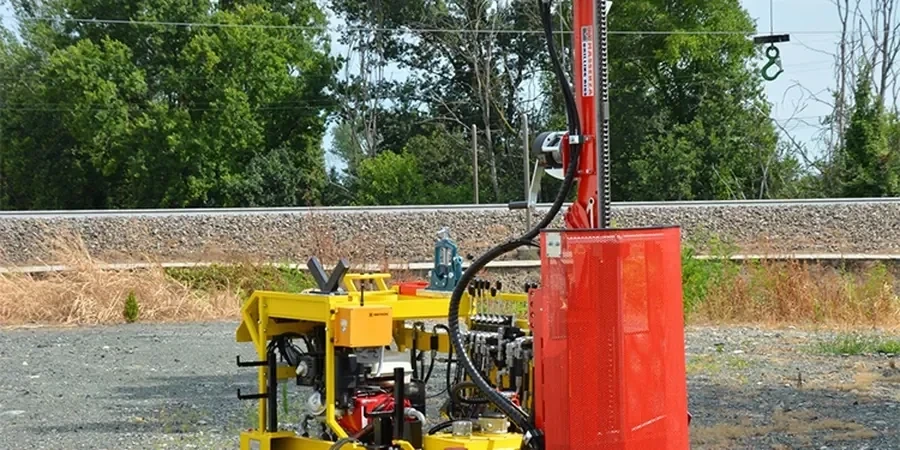
Technical reference image — Coffs Harbour
Regional considerations
A common mistake in Coffs Harbour is assuming the top 2 m of sandy loam is competent. It rarely is. Without SPT data, contractors overestimate bearing capacity and slabs crack within months. The real risk is differential settlement on old dune sands or loose fill from past subdivisions. SPT testing catches those low-density layers before concrete is poured. It also identifies artesian conditions in the Coffs Harbour coastal plain that can blow out excavations. Skipping this test means signing off on unknowns. That is not a gamble a responsible engineer takes.
Targeted testing in Coffs Harbour's loose sand and alluvial deposits. Using 63.5 kg automatic hammers for consistent energy delivery. Results include N-values, soil classification, and water table depth.
02
SPT in Weathered Meta-Sediments
For sites on fractured slate or phyllite, we adapt the test to avoid sampler damage. We record N-values up to refusal and correlate with rock quality. Suitable for slope stability and deep foundation design.
03
SPT with Seismic Downhole Logging
Combines standard penetration with P- and S-wave velocity measurements. Used for dynamic analysis and site class assessment per AS 1170.4. Ideal for schools, hospitals, and critical infrastructure in Coffs Harbour.
Standards that apply
AS 1726 – Geotechnical site investigations, AS 1289.6.3.1 – Standard Test Method for SPT, AS/NZS 1170.0 – Structural design actions
Top questions
What is the typical N-value range for soils in Coffs Harbour?
Coastal sands in Coffs Harbour usually give N-values between 4 and 15. Stiff clays and weathered meta-sediments range from 20 to 60+. Values below 4 indicate very loose fill or soft organic layers.
How deep should SPT boreholes be for a house slab in Coffs Harbour?
For standard residential slabs, we drill to at least 6 m or until competent material (N > 15) is confirmed. In areas with known fill or old creek beds, depth may extend to 10 m.
Can SPT detect liquefaction risk in Coffs Harbour?
Yes. SPT data feeds directly into the Idriss & Boulanger liquefaction triggering correlation. In Coffs Harbour's coastal plain, loose saturated sands with N-values below 12 are flagged as liquefiable in a seismic event.
How much does SPT testing cost per borehole in Coffs Harbour?
Typical cost ranges from AU$810 to AU$1.260 per borehole, depending on depth, access, and number of tests. Bulk testing on larger sites reduces the per-borehole rate.