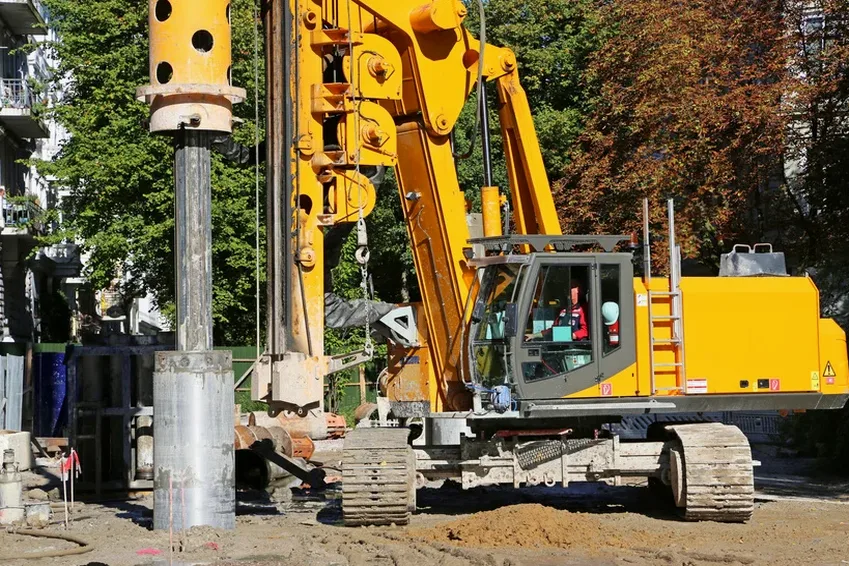
Our field crew mobilises a tracked drilling rig and dynamic cone penetrometer to test bearing capacity across Coffs Harbour's varied terrain. The coastal strip presents loose beach sands that demand shallow plate load tests, while the foothills of the Great Dividing Range expose stiff residual clays over fractured metasediments. We run each bearing capacity analysis in accordance with AS 1726-2017, using a 300 mm plate and hydraulic jack system that measures settlement increments at 50 kPa intervals. Before finalising foundation design, we often cross-reference results with a dilatometer test to capture lateral stress history and modulus values.
Coffs Harbour's coastal sands can lose 40% of bearing capacity when saturated — plate load testing before the wet season is critical.
Method and coverage
Coffs Harbour expanded rapidly from the 1970s, pushing infrastructure onto former floodplains and steep ridgelines. This development history left a patchwork of uncontrolled fill and soft alluvial deposits beneath many older suburbs. Our bearing capacity analysis addresses that legacy by testing both shallow and deep strata. We typically drill to refusal or 6 m depth, logging soil type per AS 1726, then correlate SPT N-values with Terzaghi's bearing capacity factors. For coastal projects near the jetty or marina, where groundwater sits less than 2 m deep, we run undrained triaxial tests and incorporate buoyancy effects into the ultimate capacity calculation.
Technical reference image — Coffs Harbour
Regional considerations
Compare the eastern suburbs of Coffs Harbour, built on dune sand, with the western slopes around Korora — the former settles uniformly under load, while the latter shows differential settlement when cut-and-fill platforms cross shale bands. In Boambee, where alluvial silts overlie bedrock at 8 m, bearing capacity drops sharply near creek alignments. Our analysis pinpoints these transitions, advising whether a shallow footing or deep pier system is safer. For sites on steep slopes, we also evaluate the influence of bearing capacity failure on overall slope stability, particularly after heavy rainfall events.
In-Situ with a 300 mm steel plate, hydraulic jack, and dial gauges. We measure settlement at each load increment up to 1.5 times design bearing pressure. Suitable for sand, clay, and fractured rock profiles typical of Coffs Harbour.
02
SPT Correlation Analysis
We correlate Standard Penetration Test N-values with bearing capacity using Terzaghi and Meyerhof equations. This method works well for the residual soils and weathered metasediments found across the Coffs Harbour region.
03
Cone Penetration Testing
Continuous CPT profiling with a 10-tonne cone provides high-resolution stratigraphy and direct bearing capacity estimates. Ideal for soft alluvial deposits near Coffs Creek and the harbour foreshore.
04
Foundation Design Recommendations
We deliver a written report with allowable bearing capacity values, settlement predictions, and footing type recommendations. All calculations reference AS 1726 and include partial factors for serviceability and ultimate limit states.
Standards that apply
AS 1726-2017 Geotechnical Site Investigations, AS 4678-2002 Earth Retaining Structures, Terzaghi's bearing capacity theory (1943), Meyerhof's bearing capacity factors (1963)
Top questions
What does a bearing capacity analysis cost in Coffs Harbour?
Typical costs for a bearing capacity analysis in Coffs Harbour range from AU$880 to AU$2,520, depending on site access, number of test locations, and depth of investigation. Plate load testing tends toward the higher end, while SPT correlation is more affordable. Contact us for a site-specific quote.
How deep do you test for bearing capacity in Coffs Harbour?
We test to a minimum depth of 1.5 times the proposed footing width, but typically drill to 6 m or refusal. In Coffs Harbour's coastal dunes, refusal is often shallow at 2–3 m, while the western hills require deeper drilling through residual clay to reach competent bedrock.
What is the difference between ultimate and allowable bearing capacity?
Ultimate bearing capacity is the maximum pressure the soil can support before shear failure occurs. Allowable bearing capacity applies a factor of safety (usually 2.5 to 3.0) to the ultimate value to account for uncertainties in soil strength and loading. In Coffs Harbour, we recommend a factor of safety of 3.0 for all shallow foundations on sand or clay.