The difference between building on the sandy alluvium of the Coffs Harbour CBD and the residual clay profiles of Korora or Moonee Beach is extreme. One site stands firm after heavy rain, the other can creep downhill without warning. That is exactly why we carry out slope failure analysis in Coffs Harbour before a single excavator arrives. We dig test pits, run saturated shear tests, and feed the data into limit-equilibrium software to get a factor of safety that means something. For projects on steeper terrain we also recommend a dilatometer test to measure lateral stress, and a ground-penetrating radar survey to map shallow bedrock that can act as a slip surface.
A factor of safety of 1.3 might look safe on paper, but in Coffs Harbour clay that same slope can fail after three consecutive days of rain.
Method and coverage
Coffs Harbour sits on the eastern scarp of the Great Dividing Range, with annual rainfall exceeding 1,600 mm concentrated between February and May. That means the residual soils derived from greywacke and phyllite can go from stiff to fully softened in a single wet season. Our slope failure analysis in Coffs Harbour addresses this by combining:
Borehole logging to AS 1726-2017 with SPT N-values every 1.5 m
Undisturbed tube sampling for triaxial CU tests and direct shear
Inclinometer installation to monitor real-time lateral movement
We also integrate tomography surveying when the slope geometry is complex, because refraction data helps us define the failure surface with greater confidence before we run the back-analysis.
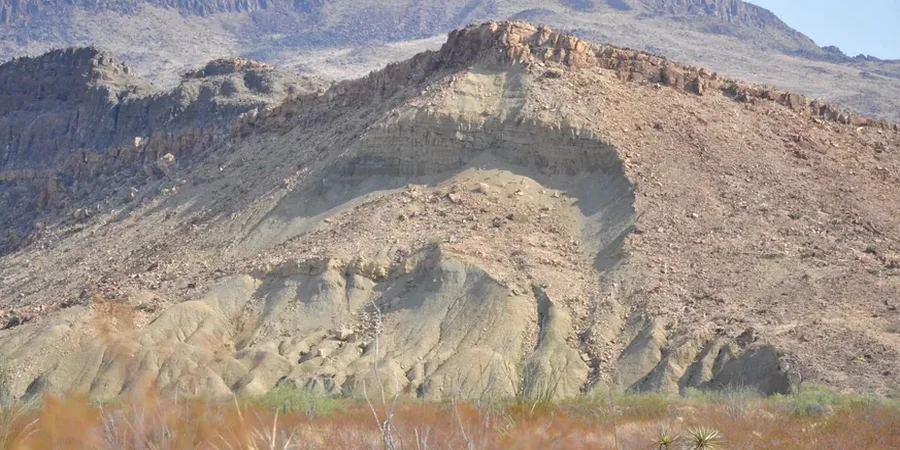
Technical reference image — Coffs Harbour
Regional considerations
A common mistake we see on the Coffs Coast is contractors cutting a bench at the toe of the slope without checking the drainage first. They remove support, water builds up behind the cut, and the whole face unloads. Without proper slope failure analysis in Coffs Harbour that accounts for perched water tables in the colluvium, the risk of a translational slide is real. We have seen retaining walls designed for 30 kPa active pressure that actually faced 60 kPa once the clay backfill got wet. That difference costs money and safety. Our analysis flags those conditions before concrete is poured.
We build 2D models using Bishop Simplified and Morgenstern-Price methods, calibrated with site-specific shear strength data from our NATA-accredited lab. The output includes critical slip surfaces, sensitivity analysis for water table fluctuations, and reinforcement recommendations.
02
Instrumented Slope Monitoring
For active landslides or high-risk cuts, we install inclinometer casings, standpipe piezometers, and surface survey markers. Data is collected weekly during the wet season and reported with threshold alarms so you can react before movement accelerates.
Standards that apply
AS 1726-2017 (Geotechnical site investigations), AS 4678-2002 (Earth-retaining structures), FHWA-NHI-05-088 (Slope stability reference manual)
Top questions
How long does a typical slope failure analysis in Coffs Harbour take?
For a standard residential development we usually complete the field work in 2 to 3 days, followed by 7 to 10 days of laboratory testing and modelling. Total turnaround is around 2 to 3 weeks.
What is the difference between drained and undrained slope analysis?
Drained analysis uses effective stress parameters (c', φ') for long-term stability, while undrained analysis uses total stress (su) for short-term construction conditions. In Coffs Harbour clay, we often run both because the pore pressure response depends on how fast the excavation is made.
Do you use the Morgenstern-Price method or Bishop Simplified?
The reference range for this service in Coffs Harbour is AU$1.460 - AU$4.380. The final price depends on the project scope and volume.
How much does a slope failure analysis cost in Coffs Harbour?
The cost ranges between AU$1.460 and AU$4.380 depending on the number of boreholes, the complexity of the slope geometry, and whether inclinometers are required. Contact us for a firm quote based on your site plan.
What triggers a landslide in residential areas of Coffs Harbour?
The main triggers are prolonged rainfall events that raise the water table, uncontrolled stormwater runoff from upslope development, and undercutting of the toe during excavation. Our analysis identifies which of these factors dominates your site.