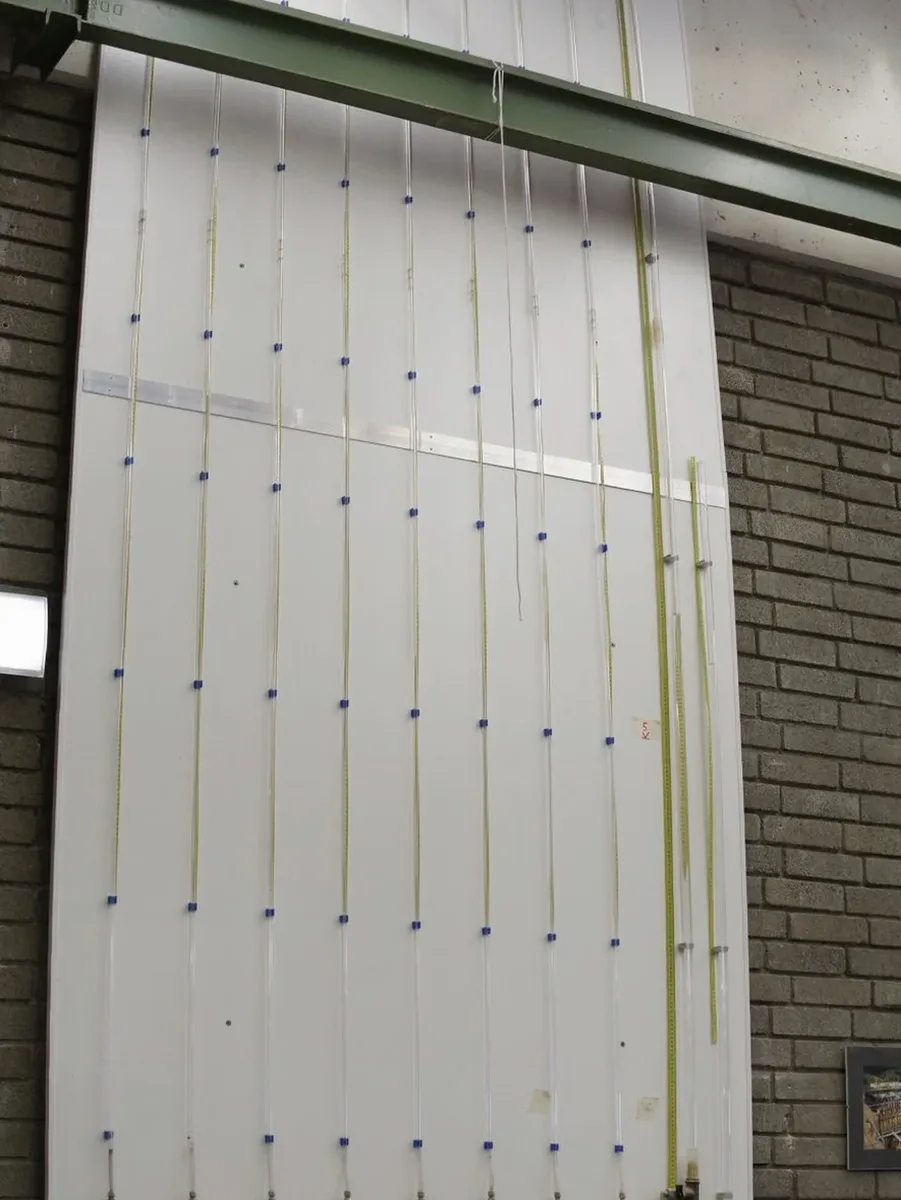
A residential development on the eastern slopes of Coffs Harbour recently encountered seepage issues right after the first heavy rain. The sandy loam over clay profile showed unexpected water flow, and the builder needed hard numbers before designing the drainage system. That is where a laboratory permeability test becomes essential. Measuring hydraulic conductivity under controlled conditions removes guesswork from foundation design and slope stability analysis. In Coffs Harbour, where rainfall exceeds 1,600 mm annually, knowing how fast water moves through the soil can prevent costly failures. The falling head method suits fine-grained soils typical of the area, while the constant head method works for coarser materials found near the coastal strip. Both approaches follow AS 1726 procedures and deliver repeatable results the engineering team can trust for retaining walls, pavement subgrades, and stormwater infiltration systems.
A falling head test on Coffs Harbour clay can take 24 hours, but the resulting k-value is the only reliable input for seepage and settlement analysis.
Method and coverage
The geological map of Coffs Harbour shows a mix of metamorphic bedrock, residual clay, and alluvial deposits along the creeks. For these conditions, the laboratory permeability test provides data that field tests cannot match due to variable saturation. The falling head method applies to clay and silt layers where flow is slow, measuring water level drop in a standpipe over time. Constant head tests work on sands and gravels found in the Coffs Harbour coastal zone, maintaining a steady hydraulic gradient while recording outflow volume. The NATA-accredited laboratory uses triaxial cell setups and flexible wall permeameters to avoid sidewall leakage, a common error in rigid wall devices. Before sampling, the team often recommends a georradar-gpr survey to locate buried obstructions and verify that borehole locations represent the overall site stratigraphy. Combining permeability data with a densidad-cono-arena field test gives a complete picture of compaction and drainage behaviour for earthworks projects. For deeper clay layers, a dilatometro provides lateral stress information that complements the vertical flow measurements.
Technical reference image — Coffs Harbour
Regional considerations
Compare two sites in Coffs Harbour: a block in Korora with well-drained sandy gravel versus a property in Toormina underlain by silty clay. The Korora site rarely needs deep drainage, while the Toormina clay can hold water for weeks, leading to foundation heave and slab cracking if not accounted for. Skipping a laboratory permeability test in these variable conditions means designing drainage blindly. The risk multiplies when building near creeks like Coffs Creek or Boambee Creek, where perched water tables fluctuate with each storm. Without accurate k-values, retaining walls may lack weep holes and French drains may undershoot their required capacity.
Falling head (AS 1289) / Constant head (AS 1289.6.7.1)
Specimen type
Undisturbed tube samples or remoulded specimens
Permeant
De-aired water or site groundwater
Hydraulic gradient
1.0 – 5.0 (adjustable per soil type)
Confining pressure
50 – 400 kPa (flexible wall triaxial)
Reporting
k20 (corrected to 20°C), void ratio, test conditions
Related services
01
Falling Head Permeability Test
Designed for fine-grained soils including clay and silt. Uses flexible wall permeameter with backpressure saturation. Ideal for Coffs Harbour residual clay profiles. Results include k-value at specified void ratio and effective stress.
02
Constant Head Permeability Test
Applied to sands and gravels from Coffs Harbour coastal deposits. Maintains constant hydraulic gradient for 1–2 hours. Provides reliable hydraulic conductivity data for drainage design, filter layers, and infiltration basins.
03
Custom Permeability Suite
Combines falling and constant head methods on multiple samples from a single site. Includes soil classification, void ratio determination, and temperature correction. Suitable for subdivision approvals and stormwater management plans.
Standards that apply
AS 1726:2017 – Geotechnical site investigations, AS 1289 – Falling head permeability (cohesive soils), AS 1289.6.7.1 – Constant head permeability (granular soils)
Top questions
What is the difference between falling head and constant head permeability tests?
Falling head tests measure water level drop in a standpipe over time, suited for low-permeability soils like clay and silt. Constant head tests maintain a steady water level while measuring outflow volume, ideal for sands and gravels. The choice depends on the soil type encountered at your Coffs Harbour site.
How much does a laboratory permeability test cost in Coffs Harbour?
The typical cost ranges from AU$630 to AU$900 per test, depending on the method, number of samples, and required confining pressures. Falling head tests are generally more expensive due to longer test durations. Contact us for a quote tailored to your project scope.
What sample quality is needed for a reliable permeability test?
Undisturbed tube samples are preferred for cohesive soils to preserve the natural fabric and void structure. For granular soils, remoulded specimens compacted to in-situ density are acceptable. Samples must be sealed and transported to the lab within 48 hours to prevent moisture loss.
How long does a falling head permeability test take?
A single falling head test typically takes 24 to 72 hours, including saturation and equilibration. The actual duration depends on the soil's hydraulic conductivity. Coffs Harbour clays with low k-values may require longer, while siltier samples finish faster. Constant head tests usually complete within 4 to 8 hours.