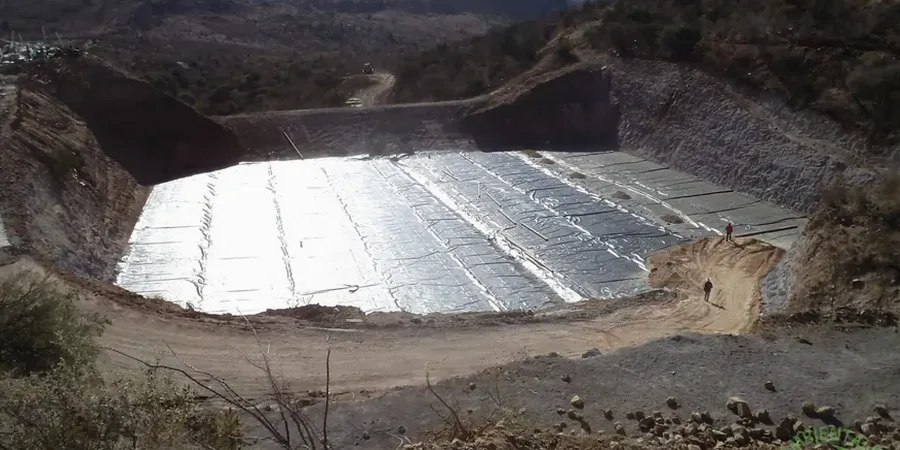
Coffs Harbour grew rapidly from a small timber port into a regional hub, and its waste management infrastructure had to keep pace. The old coastal landfill sites, often sited on floodplain alluvium or weathered metasediments, now require careful geotechnical oversight for expansion and closure. Modern landfill geotechnics in Coffs Harbour must address the area's high seasonal rainfall — over 1,600 mm annually — and the presence of shallow groundwater in the low-lying parts near the coast. Before designing a new cell, we combine a detailed site history review with a resistivity survey to map subsurface anomalies and groundwater pathways. This initial screening helps target boreholes and test pits effectively, reducing the risk of encountering uncontrolled waste pockets or perched water tables during construction.
In Coffs Harbour, the variability of residual soils over a few metres demands a site-specific liner design, not a standard specification.
Method and coverage
One thing we often see in Coffs Harbour is that the residual soils derived from the Coffs Harbour Block — interbedded greywacke, slate, and chert — can be highly variable over short distances. This makes the design of low-permeability liner systems particularly challenging. To achieve the required hydraulic conductivity of ≤1 × 10⁻⁹ m/s, we need to select and compact locally sourced clay soils with care, often blending them with bentonite. We also integrate preconsolidation via surcharge to accelerate settlement of the foundation soils before liner placement. Gas extraction wells must be spaced to account for the anisotropic permeability of the weathered rock mass. Each of these steps is grounded in the methods outlined in AS 4678 for earth-retaining structures and the NSW EPA's 2016 Waste Classification Guidelines, adapted to the specific geology of the region.
Technical reference image — Coffs Harbour
Regional considerations
AS 1726 (Geotechnical Site Investigations) and the NSW EPA's 2016 Landfill Guidelines set the regulatory baseline for Coffs Harbour landfills. The main risk here is the interaction between the liner system and the underlying fractured rock. If a rock defect like a bedding plane shear is not identified during site investigation, leachate could migrate undetected into the groundwater system that feeds Coffs Creek and the adjacent estuaries. That is why we always combine borehole logging with packer permeability testing in the bedrock, and why we run long-term seepage analyses under both wet and dry seasonal conditions. Missing a low-permeability clay layer in the foundation can also lead to differential settlement that ruptures the geomembrane, so we never skip a thorough settlement analysis before finalising the cell design.
Borehole drilling, test pitting, and geophysical surveys (resistivity, MASW) to define the subsurface profile, locate the water table, and map potential leakage paths. We install standpipe piezometers and gas monitoring points for baseline data.
02
Liner System Design & QA/QC
Design of composite liner systems (clay + geomembrane) with hydraulic conductivity testing, compaction control, and leak detection. We also provide construction-phase quality assurance, including density testing and seam integrity checks.
Standards that apply
AS 1726-2017 Geotechnical Site Investigations, AS 4678-2002 Earth-Retaining Structures, NSW EPA Waste Classification Guidelines (2016), AS 1289.5.1.1-2017 Soil Compaction and Density Tests
Top questions
What are the main geotechnical challenges for landfill design in Coffs Harbour?
The primary challenges are the variable residual soils derived from the Coffs Harbour Block, high seasonal rainfall, and shallow groundwater. These conditions require careful liner design, settlement control, and groundwater monitoring to prevent leachate migration.
How much does a landfill geotechnical investigation cost in Coffs Harbour?
Depending on the site size, number of boreholes, and laboratory testing scope, costs typically range from AU$3,470 to AU$11,570. This includes drilling, sampling, In-Situ, and a detailed report with recommendations.
What regulations apply to landfill geotechnics in New South Wales?
The key standards are AS 1726-2017 for site investigation, AS 4678-2002 for retaining structures, and the NSW EPA Waste Classification Guidelines (2016). Local council conditions may also apply, especially near watercourses like Coffs Creek.
How long does a landfill geotechnical study take in Coffs Harbour?
A typical investigation, including fieldwork, laboratory testing, and reporting, takes 3 to 6 weeks. Larger sites or those requiring extended groundwater monitoring can take 8 to 12 weeks.